Choosing among the best liquid meal supplement suppliers in China requires more than comparing prices or glossy product photos. Buyers should examine ingredient traceability, nutritional specifications, production capacity, packaging options, and the supplier’s ability to provide clear testing records. A sample bottle can reveal useful details: whether the texture stays smooth, the flavor feels balanced, and the cap seals securely. Small details matter.
Food-systems scholar Michael Pollan offers a useful perspective: “Eat food. Not too much. Mostly plants.” His advice is not specifically about liquid meal supplements, but it encourages a sensible question: does a product fit a clear nutritional purpose, rather than relying on impressive claims? For buyers, that means checking the intended use, serving size, ingredient list, and evidence behind product statements. It also means discussing formulation limits openly with potential suppliers.
This guide will compare Chinese suppliers through practical criteria, including product development, quality documentation, communication, and export experience. Ask how specifications are controlled between sample and production batch. Request documents, then confirm what they actually cover. A polished brochure is not proof. Neither is a low quote. The comparison will not be perfect; supplier information can vary, and a promising first sample may not predict every future batch. Careful questions help make the shortlist more reliable.

What qualifies as a liquid meal supplement in China’s nutrition market? The label alone is not enough. A useful product should provide measurable energy and nutrients in a drinkable form, such as a ready-to-drink carton or a powder mixed with water. Its purpose should be clear: supplementing a meal, supporting intake when appetite is limited, or providing a convenient nutrition option. Not every protein drink fits. Some offer protein but little energy or few other nutrients.
Look closely at the nutrition panel. Check serving size, calories, protein, carbohydrates, fats, and key vitamins or minerals. The proportions should match the stated use, and the package should explain how much to consume. Clear preparation and storage directions matter, too. Small details count. A bottle that needs shaking, for example, should say so.
For buyers comparing suppliers, ask for current product specifications, ingredient details, quality documentation, and sample units for practical testing. Evaluate taste, thickness, separation after storage, and package integrity. A smooth drink in a sample may behave differently after shipping or temperature changes. That part is easy to overlook. The category can also be described differently across products, so buyers should verify claims against the actual formulation and intended use rather than relying on broad marketing language.
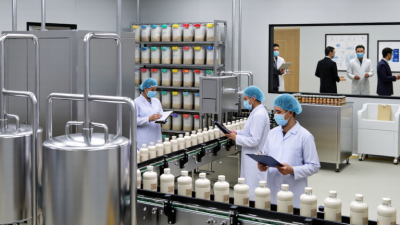
For buyers comparing liquid meal supplement suppliers in China, the first question is classification, not flavor or packaging. GB 29922-2013 divides foods for special medical purposes into three categories: total nutrition formulas, specific complete nutrition formulas, and non-complete nutrition formulas. Each serves a different dietary-management role. A bottle’s smooth texture does not make it suitable as a sole nutrition source.
The National Health Commission’s Report on Nutrition and Chronic Diseases in China (2020) found that 34.3% of adults were overweight and 16.4% had obesity. These figures describe population health, not a reason to use an FSMP without clinical advice. That distinction matters. Buyers should ask suppliers for the product’s registered category, intended use, nutrient specification, and evidence supporting its stated purpose. Check whether the formula is designed to provide complete nutrition or supplement a patient’s diet. Not interchangeable. A practical review should also inspect the label and serving instructions, then compare them with GB 29922-2013. The boundary can feel less tidy when products use similar liquid packaging. That is exactly why clear classification and verifiable documentation matter.
GB 29922-2013 classifies Foods for Special Medical Purposes (FSMP) by nutritional completeness and intended use—not by whether a product is liquid. Use the criteria below to assess product fit and screen suppliers; they are not a ranking of companies.
| Category or evaluation dimension | What it means under the standard or in procurement | What to verify for a liquid product | Practical screening question |
|---|---|---|---|
| Complete nutrition formula 全营养配方食品 |
A nutritionally complete formula intended to meet the nutritional needs of its target population when used as the sole source of nutrition, as appropriate under medical supervision. | Confirm that the product’s registered category, intended population, directions for use, nutrient information, and liquid format match the clinical and purchasing requirements. | Does the product’s approved documentation support the intended use as a complete nutrition formula? |
| Specific complete nutrition formula 特定全营养配方食品 |
A complete formula designed for the nutritional needs associated with a specific disease or medical condition. Its suitability depends on the intended patient group and professional assessment. | Check that the stated disease or medical condition, target population, use instructions, and product registration details align. Do not infer suitability from a general “medical nutrition” claim. | Is the product specifically intended for the relevant condition, and is that use supported by its approved labeling? |
| Incomplete nutrition formula 非全营养配方食品 |
A formula that does not provide a complete nutritional supply and is not intended to be the sole source of nutrition. This category includes products designed to supplement or provide particular nutrients. | Verify the intended role, eligible population, instructions, and whether additional foods or nutrition sources are required. Check that the liquid presentation does not obscure its incomplete-nutrition status. | Does the care plan account for the nutrients and energy not supplied by this product? |
| Product registration and identity | FSMP product registration and labeling should be checked against the applicable Chinese regulatory requirements. A supplier’s general food or manufacturing credentials alone do not establish that a particular product is a registered FSMP. | Request the product’s registration information, approved label, Chinese-language product documentation, and traceable batch identification. Check consistency across documents and packaging. | Can the supplier provide verifiable, product-specific registration and traceability information? |
| Manufacturing and quality controls | Assess the manufacturing site and quality system for the specific product and format. Quality documentation should be current, applicable to the production site, and supported by records. | Review applicable production permits, quality-system documentation, batch release records, testing specifications, and procedures for handling nonconforming product. | Can the supplier provide relevant, current evidence for the actual production site and product? |
| Liquid-format suitability | Liquid presentation is a product format, not a separate FSMP classification under GB 29922-2013. Handling requirements vary by formulation and packaging. | Confirm unopened and opened storage conditions, shelf life, serving size, preparation requirements, packaging integrity, and transport conditions from the approved label and technical documents. | Are storage, delivery, and post-opening instructions clear and compatible with the intended use? |
| Supplier capability and continuity | Evaluate the supplier’s ability to provide consistent, documented supply rather than relying on broad marketing claims or an unsupported “best supplier” ranking. | Assess production capacity, lead times, export or domestic documentation as relevant, complaint handling, recall procedures, and change-control communication. | Can the supplier demonstrate dependable supply and prompt notification of product or process changes? |
Use note: FSMPs are intended for use under the guidance of a physician or clinical dietitian. Confirm the current applicable regulations, product registration, and approved labeling before purchase or use; this table is a general screening guide, not medical or legal advice.
When comparing liquid meal supplement suppliers in China, check what each credential actually covers. GB 29923-2013 sets good manufacturing practice requirements for foods for special medical purposes; it does not automatically apply to every meal supplement. Ask the supplier to confirm the product’s regulatory category and provide the current standard applicable to its facility and product.
Check certificate scope, issuing body, site address, and expiry date. Small details matter.
HACCP should be supported by hazard analysis, monitoring records, and corrective actions—not just a certificate on a wall. ISO 22000 adds a documented food safety management system, but it cannot guarantee every batch.
Request recent audit findings, sanitation logs, allergen controls, and a sample batch traceability record.
WHO’s 2015 Estimates of the Global Burden of Foodborne Diseases estimated 600 million foodborne illnesses and 420,000 deaths worldwide each year.
That is broader than supplement manufacturing, but it shows why preventive controls deserve scrutiny. Paperwork can still look reassuring while a process drifts; I would verify the records against the actual production line.
When comparing liquid meal supplement suppliers in China, start with serving size, not the front-label calorie claim. Energy density, shown as kcal per 100 mL and per serving, tells you how much volume delivers a given amount of energy. A 250 mL bottle at 1.5 kcal per mL provides 375 kcal. Check that the stated serving matches the bottle. Small label differences matter.
For protein, compare grams per serving and the listed protein source. Amino acid information can add context, but a high protein number alone does not make a formula suitable for everyone. Review micronutrients individually, including amounts per serving and reference values. Check units such as mg and µg, and note unusually high or low amounts. Ask suppliers for a current specification sheet, ingredient list, allergen statement, shelf-life data, and test reports linked to the production batch. Numbers need context. Packaging, thickness, and settling can affect practical use, so request samples and observe them after storage. I would not rank formulas from a brochure alone; information may be incomplete, and that deserves a second look. Record the formula version and serving basis before comparing prices.
A supplier’s polished website is only a starting point. Request a current Chinese business license and check its Unified Social Credit Code against the company name and registered address. The stated business scope should fit the work offered. If production is outsourced, ask for the factory’s legal name and verify its relevant permits directly. Paperwork can look convincing.
Ask for recent test reports for the exact liquid product, not a similar powder or an old sample. Check the laboratory, report date, batch number, test methods, and whether the laboratory’s accreditation covers those methods. Useful results may include nutrient content, microbiological limits, and contaminant testing, depending on the product and destination. Match the report’s batch code to a retained sample or production record. A certificate alone proves little.
Export history needs the same scrutiny. Request redacted customs declarations, bills of lading, or shipping records that show the supplier’s legal entity, product description, and shipment dates. Compare these details with invoices and packing lists; names that differ deserve an explanation. Ask whether the supplier has shipped comparable liquid products to your target market, since packaging and temperature control can matter in transit. Classification and requirements vary by destination, so confirm them with a qualified local adviser. I would still verify a sample shipment: records do not show every handling problem.
Please visit our Flavor List for inspiration and contact Custom Flavors to discuss your specific flavor needs.
© 2025 Custom Flavors. All Rights Reserved.

"*" indicates required fields