For global buyers, choosing a food supplement supplier in China involves more than comparing prices and product catalogs. The real test begins with the paperwork, the production floor, and the sample in your hand. Can the supplier trace each ingredient to its source? Are batch records clear? Do test reports match the exact product and lot being offered? Small gaps matter.
Dr. Pieter Cohen, an associate professor of medicine at Harvard Medical School who studies dietary supplements, has highlighted why buyers should verify product contents rather than rely on labels alone. That is a useful principle when assessing foods supplements suppliers, especially when product specifications, testing methods, and documentation vary. A polished website is not evidence of consistent quality. Ask for current certificates, ingredient specifications, and third-party test results, then check that they refer to the same facility and product.
This guide examines Chinese suppliers through practical questions: What products do they make? How do they manage quality checks? Can they support clear communication, stable production, and export documentation? Buyers should also confirm that claims and labels meet the requirements of their destination markets. Requirements differ, and a supplier’s assurance is not a substitute for independent review.
Details reveal a lot. A dated report. A batch number that matches. A direct answer about testing. These are useful signals, not guarantees. Supplier reviews can never be perfect, and no checklist removes all uncertainty. Still, careful verification gives global buyers a stronger basis for choosing a partner—and a clearer view of what remains unknown.
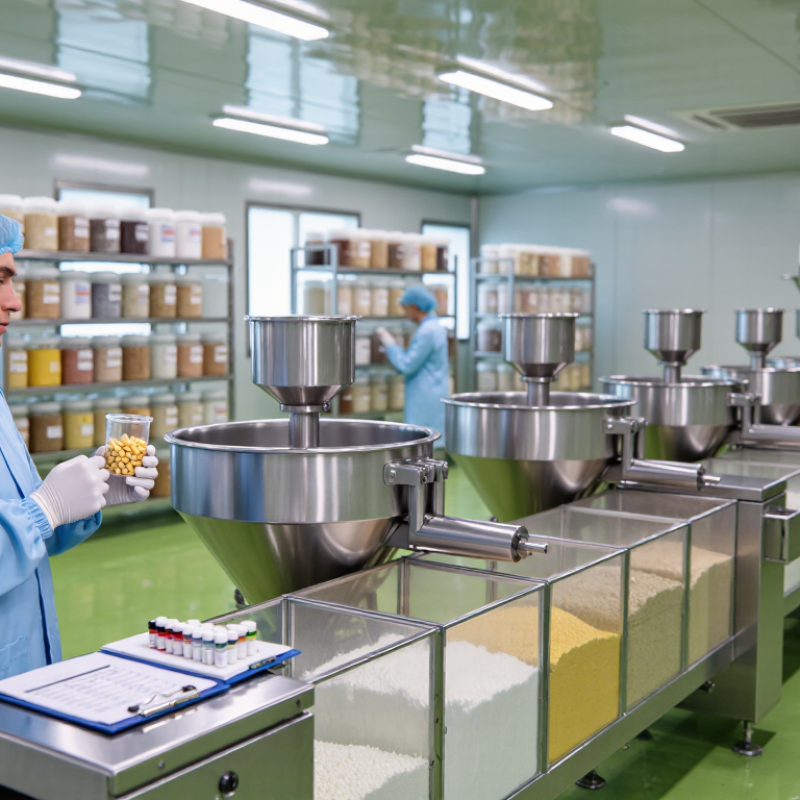
Understanding China’s food supplement supply chain means looking beyond the factory gate. Ingredient sourcing, testing, processing, packaging, and export logistics each affect lead time and consistency.
The China Federation of Logistics and Purchasing reported that national social logistics value reached
352.4 trillion yuan in 2023
up 5.2% year on year. This broad indicator shows the scale of China’s logistics network; it is not a supplement-specific measure. Scale helps, but it does not guarantee reliable quality.
For global buyers, traceability starts with the ingredient lot. Ask suppliers how they record origin, incoming inspection, batch numbers, and finished-product testing. Request current certificates and test reports, then check that product names and batch details match across documents. A sample can look perfect. Production control is harder to judge. I would also confirm how the supplier handles delayed materials, packaging changes, and retained samples. These details can expose gaps before a large order.
Tips
Map each critical ingredient to its source and backup source. Set written specifications for identity, purity, and packaging before sampling. Verify documents independently where possible, and arrange an audit for higher-risk orders. One caveat: audits capture a moment, not every production run, so keep checking shipment records and test results.
Types of Food Supplement Suppliers in China
China’s food supplement suppliers generally fall into several practical categories. Direct manufacturers operate production facilities and may handle blending, filling, and packaging. Buyers can ask which steps take place in-house and which are outsourced. A factory tour, production-flow diagram, or sample batch record can make the answer easier to assess. Details matter.
Contract manufacturers produce goods to a buyer’s specifications, while private-label suppliers may offer existing formulas with customized packaging. This can reduce development work, but the buyer should clarify formula ownership, minimum order quantities, lead times, and change-control procedures. Ingredient suppliers focus on raw materials rather than finished products. Useful records may include a current specification sheet, a certificate of analysis, and information about lot traceability. Documents still need review; a certificate alone does not prove every detail.
Trading and export companies connect buyers with factories and coordinate quotations, shipping, or communication. Some provide useful local support, though buyers may have less direct visibility into production. Integrated suppliers combine several services, such as sourcing, manufacturing, and packaging. A polished catalog can still leave unanswered questions. Compare suppliers through specific requests: ask for a recent batch’s documentation, confirm who performs testing, and check whether the proposed sample matches the quoted production process. I would not assume that a larger service package means stronger quality control.
Typical service scope by supplier type — a qualitative guide, not market-share data. Actual capabilities vary by supplier.
Scores indicate typical relative scope on a 1–5 scale, where 1 is limited and 5 is broad. Verify product, quality, and export capabilities directly with each supplier.
Chinese food supplement suppliers often build expertise around specific ingredient families, rather than every category. Some focus on botanical extracts, offering powders with stated active-compound ranges and extraction details. Others specialize in vitamins, minerals, amino acids, or protein ingredients for capsules, tablets, and drink mixes. The specialty matters.
For global buyers, useful supplier discussions go beyond a product list. Ask for a current specification sheet, batch certificate, and clear methods for identity and potency testing. For plant extracts, check the declared plant part, extraction solvent, carrier content, and marker compounds. For probiotic ingredients, review strain identification, viable count at dispatch, and storage conditions. Paperwork can look polished.
Manufacturing strengths may include custom blending, granulation, or small-format sachets, but capabilities vary by facility. Request a representative sample and compare its color, smell, flow, and solubility with the written specification. A minor mismatch deserves a question, not an assumption. Supplier audits and independent testing can add confidence, especially when batches will enter several markets. Supplier claims alone are not proof.
For global buyers, supplier quality means more than a polished certificate. Check whether each certificate is current, independently verifiable, and relevant to the product and production site. Ask for the scope, issuing body, and audit date. Paperwork matters. But it does not prove that every batch was handled consistently.
Review product specifications, batch records, and certificates of analysis for actual lots, not just sample documents. Confirm that test methods match the risks involved, such as microbial contamination, heavy metals, or ingredient identity. Ask whether testing is performed in-house or by an independent laboratory, and request traceable results. Small details count: lot numbers should connect raw materials, production records, and finished goods.
A video call or site audit can reveal practical controls: labeled storage, calibrated scales, cleaning records, and clear separation of materials. Ask how the supplier investigates failed tests and manages changes to ingredients or processes. No checklist is perfect. A tidy audit score can still miss a rushed handover or an unclear record, so compare answers with evidence. Communication also matters; prompt, specific replies often make quality issues easier to resolve.
For global buyers, sourcing from China starts with product classification, not a price list.
Import rules vary by destination and product type. Check whether the manufacturing facility needs registration and whether the product requires specific notifications, labels, or certificates. China’s GACC Decrees 248 and 249 set registration and food-import requirements for relevant overseas food manufacturers; confirm their application to your product with the importer or customs adviser.
Demand makes careful checks worthwhile. The Council for Responsible Nutrition’s 2023 Consumer Survey found that 74% of U.S. adults use dietary supplements. Ask suppliers for batch-specific certificates of analysis, ingredient identity and potency results, allergen statements, and stability data. Verify that testing laboratories hold ISO/IEC 17025 accreditation for the relevant methods.
Paperwork is only a start. A polished certificate may not show how results were obtained.
The World Health Organization estimates that contaminated food causes 600 million illnesses worldwide each year. This figure covers food generally, not supplements specifically, but it underscores the value of traceability. Request lot codes, manufacturing dates, and a documented process for handling deviations.
Compare a pre-shipment sample with the delivered batch, especially for color, odor, and packaging seals. One uncomfortable gap: buyers sometimes rely on a single test when ingredient variation can persist between batches.
Please visit our Flavor List for inspiration and contact Custom Flavors to discuss your specific flavor needs.
© 2025 Custom Flavors. All Rights Reserved.

"*" indicates required fields