Choosing flavoring powder for supplements is not simply a matter of picking a pleasant taste. Buyers should consider how it performs in the finished formula, not just on a tasting spoon. A vanilla note may seem smooth in water, then taste thin beside minerals or plant proteins. Citrus can brighten a blend, but its aroma may change during processing or storage.
Small trials reveal useful details. Compare samples at the intended serving strength, using the actual base whenever possible. Note sweetness, aftertaste, color, and how easily the powder disperses. A flavor that works in a shaker may behave differently in a drink mix or chewable product. There is no universal winner.
Before requesting a quote, define the application, target profile, and expected order volume. Ask suppliers for specifications, ingredient details, allergen information, recommended usage levels, and storage guidance. Review consistency across samples and batches, not just the first impression. Clear documentation matters.
Price matters, of course. So do lead times, minimum order quantities, and technical support. Request representative samples and record your test conditions; otherwise, comparisons can become subjective. Even careful testing has limits. A promising sample is not proof of long-term stability, so confirm performance in your own formula and packaging.
This 2026 buyer’s guide explains practical criteria for comparing options, asking better supplier questions, and avoiding rushed decisions. The best choice is the one that fits the product, process, and consumer experience—not merely the flavor name on a specification sheet.
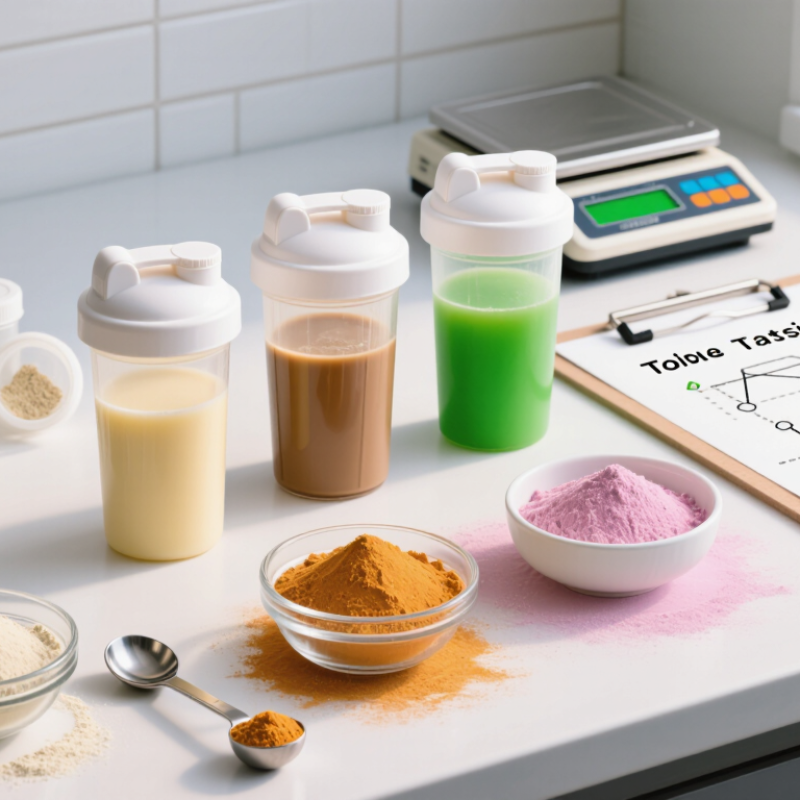
Flavoring powders are dry blends that give supplement formulas a recognizable taste and aroma. They may contain flavor compounds, sweeteners, acids, and carriers that help distribute ingredients evenly. The exact blend depends on the product and its other ingredients. Small details matter.
When mixed into water, the powder dissolves or disperses, releasing flavor compounds that reach the nose and taste receptors. A citrus note can make a drink feel brighter, while vanilla may soften some bitter edges. Flavoring does not remove bitterness; it can only change how the overall taste is perceived. That distinction is easy to overlook.
In practice, formulators test the flavor with the finished supplement, not in water alone. Minerals, plant extracts, and protein ingredients can alter sweetness, color, or mouthfeel. A powder that tastes pleasant in a sample cup may turn chalky after standing for several minutes. Texture matters too. Humidity and storage conditions can affect how easily a blend flows or clumps, so packaging and handling deserve attention. There is no perfect flavor for everyone, and taste testing can be subjective. Careful trials across realistic serving sizes provide more useful feedback than one quick sip.

2026 Top Flavoring Powder for Supplements Buyers Guide: Key Types and Ingredient Profiles for Different Supplement Formats
Powdered drink mixes need flavors that disperse quickly and stay pleasant in cold water. Citrus, berry, and light tropical profiles suit electrolyte-style blends, while acids and high-intensity sweeteners can sharpen or balance them. Protein powders often need rounder notes, such as cocoa or vanilla, to soften lingering bitterness. Botanical blends can benefit from ginger, lemon, or spice, though masking every earthy note may make the flavor feel artificial.
The Council for Responsible Nutrition’s 2024 Consumer Survey found that 75% of U.S. adults use dietary supplements. That broad use spans many formats, so one flavor system rarely fits all. Check solubility, acidity, carrier ingredients, and performance after storage—not only the first sip. A bench sample can taste convincing, then turn flat in a large batch. I have seen teams underestimate that gap.
Tips: Test the flavor in the finished formula, at its intended serving size and water temperature. Compare sweetness after mixing, then again after several minutes. Ask suppliers for allergen, stability, and ingredient documentation, and record any off-notes rather than masking them immediately. A little restraint often tastes more credible.
Flavor is not a finishing touch; it can decide whether a powder gets used every day. The International Food Information Council’s 2024 Food & Health Survey found that taste influenced food choices for 85% of respondents. The Council for Responsible Nutrition’s 2024 survey reported that 75% of U.S. adults use dietary supplements. These figures make sensory testing worth the effort. Compare samples in the intended formula, not just in water. Protein, minerals, acids, and sweeteners can shift flavor sharply. Try a cold shake and a room-temperature drink. Small differences matter.
Solubility needs a practical check. Stir a measured dose into the actual serving volume, then inspect for floating specks, sediment, foam, and residue after several minutes. Repeat with the real mixing method. A bench test can still mislead. Powder that disperses well on day one may clump after storage. Check moisture exposure, packaging, and flavor stability across expected temperature conditions. Record aroma and taste at the start, then at planned intervals. A simple log helps more than memory.
Labeling needs belong in the comparison too. Request a full ingredient breakdown, including carriers, processing aids where applicable, and allergen information. Confirm that the proposed ingredient names fit the finished product’s labeling requirements in each target market; requirements can differ. Review the flavor system alongside the full formula, not in isolation. One detail is easy to miss: a “natural” flavor profile does not automatically mean every ingredient has the same labeling status. Verify with qualified regulatory staff before finalizing specifications.
Use this comparison to shortlist flavor systems for powders, drink mixes, and other supplement formats. Performance depends on the full formula, processing conditions, packaging, and intended market.
| Flavoring Powder Type | Typical Fit | Flavor Profile and Masking | Solubility and Dispersion | Stability Considerations | Labeling Considerations | What Buyers Should Verify |
|---|---|---|---|---|---|---|
| Spray-dried flavor powder | Dry drink mixes, protein powders, and powdered supplements. | Available in a broad range of profiles. Can provide recognizable top notes, but may not fully mask strong bitter, mineral, or botanical notes on its own. | Generally disperses readily in water; actual wetting and dissolution depend on the carrier, particle size, and beverage formula. | Moisture, oxygen, heat, and light can affect aroma over time. Moisture-barrier packaging and suitable storage conditions help protect quality. | Carriers and processing aids may need to be declared according to applicable market rules and the finished product’s ingredient statement. | Ask for recommended use levels, carrier details, allergen information, and performance data in a representative finished formula. |
| Encapsulated flavor powder | Products where aroma retention during storage or processing is a priority. | Encapsulation can help protect volatile flavor components and control their release. It does not guarantee effective masking of every off-note. | May disperse more slowly than a non-encapsulated powder, depending on the encapsulating material and the mixing method. | Can improve protection against selected environmental stresses, but stability remains formulation- and package-dependent. | Encapsulating materials and carriers may affect the ingredient declaration; confirm names and regulatory status for each sales market. | Review release behavior, moisture sensitivity, processing tolerance, and sensory results after storage in the intended package. |
| Natural flavor powder | Formulas seeking flavor ingredients described as natural, subject to the rules of the target market. | May offer a familiar or ingredient-appropriate flavor character. Natural origin alone does not predict intensity, consistency, or masking performance. | Often supplied on a carrier; dispersibility varies with the carrier and flavor composition. | Some flavor components are sensitive to oxygen, light, heat, or moisture. Confirm shelf-life performance in the finished product. | “Natural flavor” definitions and permitted labeling language vary by jurisdiction and product category. Obtain market-specific documentation. | Check the flavor’s regulatory documentation, carrier, allergen status, origin claims, and sensory fit in the complete formula. |
| Sweetened flavor system | Ready-to-mix beverages designed to combine flavor and sweetness in one ingredient system. | Can simplify taste balancing and improve perceived flavor fullness. Sweetness intensity and aftertaste vary by sweetener and use level. | Usually designed for dry beverage applications, but dissolution and possible settling should be tested in the intended serving method. | Sweetener choice can affect stability, flavor balance, and performance under heat or changing pH conditions. | Sweeteners must be declared as required by local rules. Any relevant warnings or additional statements depend on the ingredient and market. | Confirm sweetener identity, sweetness contribution, aftertaste, serving size, and compatibility with the product’s nutrition and labeling targets. |
| Flavor and acidulant blend | Fruit-style drink powders and formulas that benefit from a tart or bright taste profile. | Acidity can sharpen fruit notes and balance sweetness; excessive acidity may make a formula taste harsh or amplify certain off-notes. | Acidulants are generally water-soluble, but the complete blend’s dispersion depends on all ingredients and the mixing conditions. | Low pH in the prepared beverage can affect some nutrients, colors, and flavor components. Test the complete formula over its intended shelf life. | Declare each component as required; acidulant naming conventions can differ between markets. | Measure prepared-beverage pH, assess nutrient and color compatibility, and run sensory testing at the labeled dilution. |
| Emulsified flavor powder | Powdered applications needing flavor components that are poorly soluble in water. | Can help incorporate oil-based flavor components into a dry mix, though flavor release and mouthfeel depend on the system. | Typically disperses rather than truly dissolves; some formulas may show cloudiness, surface oil, or settling if not properly matched. | Oxidation and emulsion stability are key considerations. Packaging, antioxidants where permitted, and storage conditions can influence performance. | Emulsifiers, carriers, and other components may require declaration. Review additive permissions and labeling rules in each intended market. | Test in the actual beverage, including mixing, standing time, appearance, aroma, and any visible separation. |
| Flavor powder for high-protein or mineral-rich formulas | Protein drinks and supplements with pronounced bitter, earthy, metallic, or chalky notes. | Often requires a tailored flavor blend and careful sweet-acid balance. One flavor ingredient may not mask all off-notes. | Protein and mineral ingredients can affect wetting, foaming, sediment, and perceived flavor release; assess the entire powder blend. | Protein type, mineral salts, pH, moisture, and storage time can change sensory performance and physical behavior. | Check all flavor-system components alongside the protein, mineral, allergen, and other required declarations. | Run blinded sensory trials at the intended serving size and water volume, both freshly mixed and after a defined standing period. |
Buying note: Request a specification sheet, allergen and cross-contact information, applicable regulatory documentation, and a sample for testing. Compare candidates at the same use level and dilution, then evaluate taste, aroma, dispersion, appearance, and stability in the finished formula. Labeling requirements vary by jurisdiction; confirm final declarations with qualified regulatory personnel.
A flavoring powder should arrive with more than a pleasant aroma. Buyers need a current specification showing composition, carriers, moisture limits, and recommended storage conditions. Ask for a lot-specific certificate of analysis, then check that its test methods and acceptance limits are clear. Confirm allergen statements and cross-contact controls. Keep records.
A certificate alone is not proof of a complete safety program. Review the supplier’s food-safety plan, traceability process, and recall procedure; ask how quickly a production lot can be traced to its inputs. Test results should match the product and intended use. Depending on the formula and market, relevant checks may include microbiological counts, heavy metals, or other contaminants. Verify that any quality certifications cover the actual manufacturing site and product category.
Regulatory needs differ by destination and application, so confirm ingredient declarations, flavor descriptions, and permitted-use conditions with qualified regulatory staff. Request change-notification terms for shifts in ingredients, processing, or production location. Then run a small bench test: powders can clump, fade, or taste harsh in a finished supplement. I would not rely on a sample alone. Supplier documents matter, but a few practical checks can still be missed, and that deserves a second look.
Choosing a flavoring powder starts with the finished product, not a flavor trend. A blend for a shaker bottle must disperse quickly and taste balanced in cold water. A chewable or sachet may need a stronger aroma and less lingering sweetness. Check compatibility with the formula’s minerals, proteins, acids, and sweeteners; these can change flavor after processing or storage. CRN’s 2024 Consumer Survey reported that 74% of U.S. adults use dietary supplements. That broad audience is not a flavor preference forecast, though. Test with the specific users and market you intend to serve.
Tips: Compare samples at the intended serving strength and temperature. Record first taste, aftertaste, aroma, and any chalkiness. Run a small blind test, then repeat after several weeks of storage. A pleasant sample on day one can fade or turn oddly bitter. Don’t skip that check.
Ask suppliers for application guidance, ingredient specifications, and batch consistency data. Confirm the powder blends evenly and performs in your actual production process, not only in a beaker. Consider local taste habits and sweetness expectations, but avoid assuming one market has a single palate. Cost matters, yet a cheaper flavor that needs a higher dosage may not reduce total cost. I’d treat early sensory scores as provisional; a small panel can miss real-world preferences. Keep notes, refine the blend, and retest before scaling up.
Please visit our Flavor List for inspiration and contact Custom Flavors to discuss your specific flavor needs.
© 2025 Custom Flavors. All Rights Reserved.

"*" indicates required fields