Buying Lutein Powder in bulk requires more than comparing prices on a supplier’s website. A low quote may hide inconsistent potency, weak documentation, or expensive storage requirements. This guide presents seven practical tips for evaluating suppliers, verifying quality, and protecting your production schedule. It focuses on evidence, not attractive claims.
Start with identity and specification. Ask whether the material is free lutein, an ester, or part of a blended ingredient. Request a current certificate of analysis for the exact batch. It should show assay results, testing methods, moisture, microbial limits, heavy metals, and relevant contaminants. Independent laboratory verification adds confidence. However, one report cannot prove every future shipment meets the same standard. That limitation deserves attention.
Supplier experience also matters. Review manufacturing certifications, traceability procedures, allergen controls, and change-notification policies. A reliable partner should explain the botanical source, extraction process, carrier ingredients, packaging materials, and recommended storage conditions. Look for light-resistant, sealed containers, especially when the powder may face warehouse lighting or repeated handling. Small details matter.
Calculate the complete cost. Include shipping, customs, testing, minimum order quantities, shelf life, and potential waste. Request a representative sample before signing a large purchase agreement. Evaluate its color, flowability, odor, dispersibility, and laboratory results against your product requirements. Your first decision may still need revision. Supplier audits can reveal gaps that brochures never mention. Verify applicable food, supplement, labeling, and import requirements in each target market. The safest bulk purchase combines technical evidence, transparent communication, and a realistic plan for quality control after delivery.
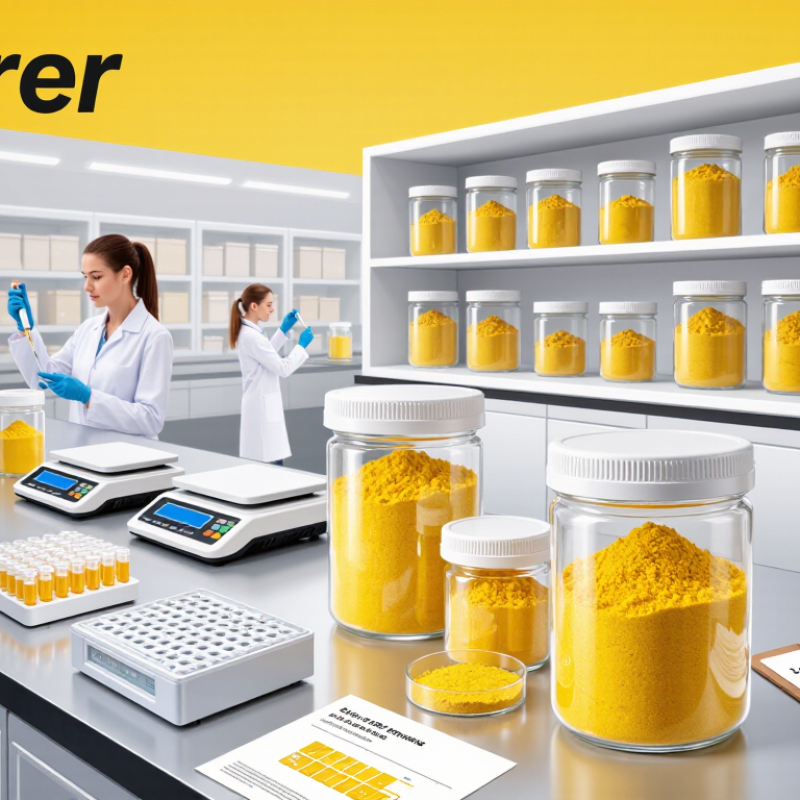
Start with the end use, not the lowest quotation. Bulk lutein powder for capsules may need different flow, density, and particle-size properties than powder used in beverage premixes. Write the target serving size, lutein concentration, carrier system, solubility, packaging format, and expected annual volume. Be specific. A vague requirement can create expensive rework.
Clinical evidence also shapes the specification. The National Eye Institute’s AREDS2 study used 10 mg of lutein and 2 mg of zeaxanthin daily in its tested formulation. This does not automatically define your product’s dose. It does provide a useful reference point for formulation discussions. Confirm whether your application needs free lutein, an esterified form, or a water-dispersible preparation. These choices affect stability and production behavior.
Demand matters, but it can mislead. The Council for Responsible Nutrition reported that 74% of U.S. adults used dietary supplements in its 2023 consumer survey. That figure supports broad category demand, not guaranteed demand for your product. Plan with verified sales data. Ask for recent certificates of analysis, assay results, microbial limits, heavy-metal testing, residual-solvent data, and stability records. Independent laboratory confirmation is worth considering for larger purchases. One overlooked detail remains packaging: oxygen, heat, and light can gradually reduce quality. I would specify opaque, sealed containers and review transport conditions before approving the order.
Bulk lutein purchasing should begin with measurable evidence, not a polished product photograph. Ask for a recent certificate of analysis linked to the exact batch. The report should identify lutein purity, assay method, testing date, and laboratory details. HPLC testing is commonly used because it can distinguish lutein from related carotenoids. A percentage without a method is incomplete.
Check whether the stated concentration refers to pure lutein or the entire powder blend. Some products contain carriers, oils, antioxidants, or other carotenoids. These ingredients affect both potency and labeling accuracy. Confirm the chemical form, source material, particle size, moisture level, and recommended storage conditions. Small details matter. A 20-kilogram order can become difficult to use if the powder absorbs moisture and forms hard lumps.
Do not rely on one document. Compare the COA with the specification sheet and package label. Independent testing for heavy metals, pesticides, residual solvents, and microbial limits adds useful assurance. A qualified laboratory should provide traceable results, although testing still has limitations. I have seen buyers focus on purity while overlooking concentration per serving. That mistake can distort formulation costs. Ask for retention samples, packaging details, and batch consistency records before approving a large shipment. Some questions may feel excessive. They are cheaper than discovering an unclear specification after delivery.
7 Tips for Buying Lutein Powder in Bulk
A reliable supplier should provide clear qualification records, not vague promises. Ask for company registration, facility location, operating history, and relevant quality certifications. Manufacturing standards should match the product’s intended use. Look for documented GMP procedures, sanitation controls, allergen management, and a traceable batch system. A certificate alone is not enough.
Request a recent certificate of analysis for the exact lutein powder batch. It should state lutein content, testing methods, production date, expiry date, and batch number. Check whether an independent laboratory confirms identity and potency through HPLC testing. Microbial limits, moisture, heavy metals, and pesticide residues also deserve attention. Ask for sample results before discussing a large purchase. Small details matter.
Visit the facility when practical, or request a live video audit. Observe material storage, sealed containers, temperature records, and cleaning routines. Confirm that raw materials can be traced back to their source. Review the supplier’s process for handling deviations, complaints, and product recalls. This step often exposes weak systems. Still, no review is perfect. Documents may be current while daily practices fall behind. Use a written quality agreement, retain a sealed reference sample, and test incoming shipments independently. Price should come after evidence, not before it.
Use this procurement checklist to compare bulk lutein powder suppliers. The weighting is an illustrative review model based on common quality, regulatory, testing, and supply-chain considerations; always confirm specifications against your intended market and product format.
Prioritize suppliers that can provide verifiable manufacturing credentials, batch-specific certificates of analysis, validated identity and assay testing, contaminant results, GMP controls, full traceability, and documented stability or storage information.
When buying lutein powder in bulk, compare the landed cost, not only the quoted price per kilogram. Grand View Research estimated the lutein market at about USD 343.5 million in 2023, with a projected 6.8% CAGR through 2030. Mordor Intelligence reported a different 2024 estimate, near USD 360 million. Definitions vary, so market figures need careful reading. Price is not everything. Request the assay percentage, formulation type, carrier content, testing fees, freight, and remaining shelf life. A lower price may reflect weaker documentation or a larger minimum order quantity.
Minimum orders should match your production cycle and cash flow. Ask whether the supplier permits a pilot order before committing to a pallet. Packaging details matter. Prefer light-resistant, oxygen-limited, moisture-barrier bags, often placed inside sealed cartons or drums. Keep samples sealed. Confirm whether nitrogen flushing, desiccants, and tamper-evident closures are included. Storage conditions should appear on the specification sheet, not only in an email. Ask for temperature and humidity limits, recommended handling time, and real-time or accelerated stability data. USP General Chapter <659> offers useful packaging and storage principles, although it does not replace product-specific instructions. A practical mistake is treating “cool and dry” as precise guidance. It is not. Compare certificates of analysis, microbiological results, heavy-metal testing, batch traceability, and retest policies before signing a long-term agreement.
7 Tips for Buying Lutein Powder in Bulk
Review Regulations, Shipping Terms, and Long-Term Supply Support
Tip 1: Verify the powder’s legal status in your destination market. Check permitted uses, labeling rules, import documents, and maximum limits. Ask for recent certificates of analysis, identity testing, and contaminant results. A supplier should explain testing methods clearly. Vague answers deserve caution.
Tip 2: Confirm shipping terms before comparing prices. Clarify the Incoterm, delivery point, insurance responsibility, customs documents, and expected transit time. Lutein powder may need protection from heat, moisture, and light. Request sealed packaging details and temperature records when conditions are difficult. Small omissions can become expensive delays.
Tip 3: Test a representative sample before signing a long contract. Compare color, assay, particle size, odor, and dispersibility against your production needs. Record the batch number and storage conditions. This step is practical, not glamorous. It can prevent a costly mismatch.
Tip 4: Discuss long-term supply support in writing. Ask about minimum order quantities, lead times, safety stock, forecast changes, and batch-to-batch consistency. Request a change-notification policy for raw materials or processing methods. I would not rely on friendly promises alone. Written procedures are stronger.
Tip 5: Review storage guidance with your quality team. Include shelf life, retesting rules, and unopened-package requirements. Keep backup supply only when your warehouse can protect product quality. More inventory is not always safer. It may simply age quietly.
Tip 6: Check communication during a small trial order. Measure response speed, document accuracy, and problem-solving ability. One imperfect shipment can reveal more than a polished sales presentation. Record what went wrong and what improved. That evidence supports a wiser bulk decision.
| No. | Buying Tip | Key Data Dimension | What to Review | Practical Acceptance Point | Risk-Control Evidence |
|---|---|---|---|---|---|
| 1 | Confirm the Product Specification | Identity, lutein concentration, physical form, and appearance | Define whether the material is free lutein or lutein ester, and specify the declared lutein content, carrier ingredients, color, odor, particle size, moisture, and dispersibility requirements. | The purchase specification should match the intended application, dosage format, processing conditions, and label declaration. | Approved product specification, current COA, representative sample, and identity test result. |
| 2 | Review Regulatory Requirements | Destination-market compliance | For the United States, dietary supplement manufacturing, packaging, labeling, and holding activities are covered by FDA 21 CFR Part 111. In the European Union, food-supplement requirements are linked to Directive 2002/46/EC and national rules. | The importer or finished-product manufacturer must confirm that the ingredient, intended use, labeling, and claims are permitted in the target market. | Regulatory questionnaire, allergen and GMO statements, safety documentation, and market-specific label review. |
| 3 | Verify Quality and Testing Controls | Analytical method and contaminant limits | Check that the COA identifies the test method for lutein assay, identity, moisture, microbiological quality, heavy metals, residual solvents where relevant, and other specification items. | Use validated or suitably verified methods, preferably including HPLC for assay and an identity method appropriate to the material. | Batch-specific COA, laboratory accreditation details, method references, and independent verification or pre-shipment testing. |
| 4 | Clarify Packaging and Storage | Protection from oxygen, light, heat, and moisture | Lutein is sensitive to oxidation and light. Review inner-bag material, sealing method, outer container, net weight, desiccant or inert-gas practices where applicable, storage temperature, and humidity instructions. | Packaging should remain intact during transport and support the stated shelf life under the documented storage conditions. | Packaging specification, stability data, storage statement, photographs of sealed units, and transport-damage procedure. |
| 5 | Set Clear Shipping Terms | Incoterms 2020, transport mode, and import responsibility | Compare EXW, FCA, FOB, CIF, and DAP offers carefully. Confirm who handles export clearance, freight, insurance, customs clearance, duties, unloading, and delivery to the named place. | Every quotation should state the Incoterm, named place or port, currency, validity period, freight inclusion, and estimated transit time. | Commercial invoice, packing list, transport document, certificate of origin where required, and agreed claims process. |
| 6 | Evaluate Cost Beyond the Unit Price | Total landed cost and payment exposure | Include product price, testing, packaging, freight, insurance, customs duties, taxes, warehousing, bank charges, currency risk, and possible inspection or relabeling costs. | Compare suppliers using the same specification, quantity basis, delivery location, Incoterm, payment terms, and quality requirements. | Landed-cost worksheet, written quotation, payment schedule, credit terms, and documented price-adjustment conditions. |
| 7 | Assess Long-Term Supply Support | Capacity, lead time, MOQ, traceability, and continuity planning | Ask about minimum order quantity, standard production lead time, forecast requirements, batch allocation, change-control notification, complaint response, recall support, and backup raw-material or production arrangements. | A sustainable supply plan should define order cadence, forecast flexibility, target safety stock, lot traceability, and service expectations before the first bulk purchase. | Supply agreement, quality agreement, business-continuity plan, audit rights, batch records, and corrective-action timeline. |
Note: Regulatory obligations, import requirements, specifications, shelf life, lead times, and acceptance limits should be confirmed for the specific lutein powder, application, and destination market.
Please visit our Flavor List for inspiration and contact Custom Flavors to discuss your specific flavor needs.
© 2025 Custom Flavors. All Rights Reserved.

"*" indicates required fields
