Choosing a Pacbio Revio sequencer is a major investment, and the listed instrument price is only part of the decision. This guide explains how to assess 2026 pricing, compare purchase options, and identify costs that may sit outside the initial quote. Prices can vary by region, configuration, supplier, and contract terms. Treat any online figure as a starting point, not a guaranteed offer.
Ask for a current, itemized quotation. Check whether it includes delivery, installation, staff training, warranty coverage, and service support. Then review recurring expenses, such as sequencing consumables, data storage, and computing capacity. A lower quote can look reassuring. It may not tell the whole story. Confirm what is included in writing, and ask how long quoted prices remain valid.
The right choice depends on more than the purchase price. Consider expected sample volume, laboratory workflow, available space, power requirements, and the expertise needed to operate the system. Ask vendors for documentation that supports performance and service claims, and compare responses using the same requirements. This guide is intended to help buyers ask better questions, not replace a tailored vendor assessment. Some costs are difficult to estimate before your workflow is defined; that uncertainty deserves attention, even when it makes budgeting less tidy. Verify specifications and commercial terms directly with the supplier before making a decision.
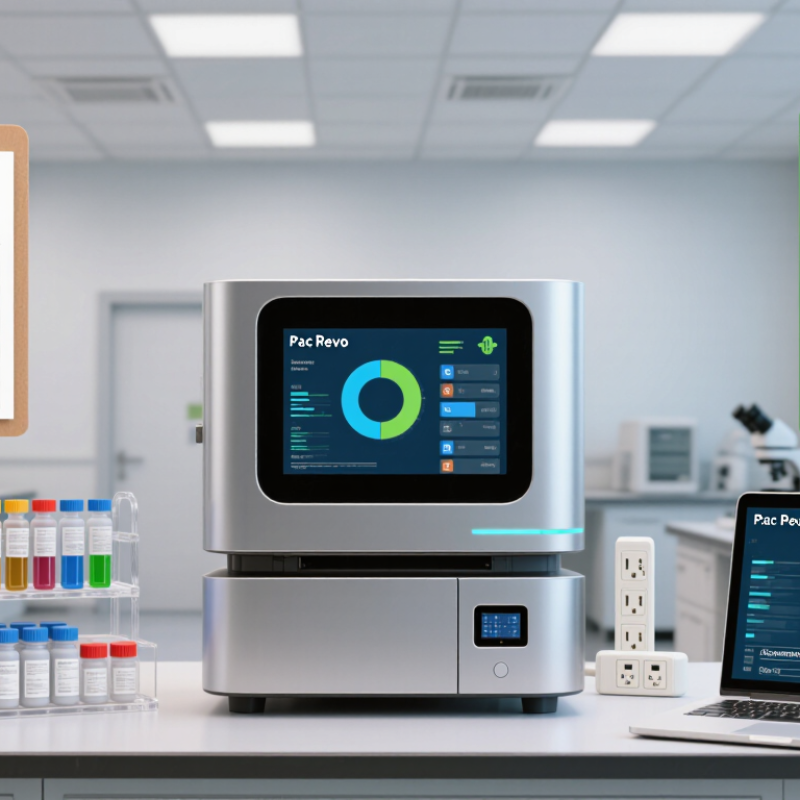
The sequencer uses circular consensus sequencing to produce highly accurate, long reads. Multiple passes around a DNA molecule help distinguish true sequence information from random errors. Its four-cell design supports parallel processing, with output reaching roughly 360 gigabases per run under suitable conditions. Actual yield depends on sample quality, library preparation, and run settings. Typical runs take about a day, so laboratories should plan staffing and data transfer accordingly.
Read length and accuracy are useful for resolving complex regions, structural variants, and phased genomes. They do not remove every challenge. High output can quickly fill storage, and weak input DNA may reduce usable yield. A realistic assessment should include preparation time, computing capacity, consumables, and ongoing service costs—not just the instrument’s purchase price. These details are easy to underestimate.
Tips: Confirm expected yield with your sample type before budgeting. Check local power, cooling, and data-storage capacity. Keep a small pilot run in the plan; real workflows rarely behave perfectly.
| Specification | Typical Configuration or Guidance | Buying Consideration |
|---|---|---|
| Sequencing technology | Single-molecule, real-time sequencing with circular-consensus analysis for producing highly accurate long reads. | Confirm that the assay and analysis workflow match the required read length, accuracy, and sample type. |
| Parallel processing | Four sequencing cells can be run in parallel in the high-throughput configuration. | Parallel capacity is useful for batching samples, but actual utilization depends on sample volume and scheduling. |
| Typical read length | Common circular-consensus read lengths are approximately 10–25 kb; the distribution depends on sample quality and library preparation. | Longer inserts can help resolve repetitive regions and structural variation, but require intact, high-quality DNA. |
| Read accuracy | Consensus reads can exceed 99% accuracy, with results varying by read depth, sample, and analysis settings. | Ask for accuracy benchmarks using the intended assay and the same quality thresholds planned for production. |
| Output per sequencing cell | Up to approximately 90 Gb of circular-consensus sequence per cell under suitable conditions; actual yield is assay-dependent. | Use local pilot-run data when estimating project capacity; maximum output is not guaranteed for every sample. |
| Potential output per run | With four cells, the combined output can reach approximately 360 Gb per run when each cell achieves the stated upper-range yield. | Plan for lower realized output where sample quality, library size, or workflow constraints reduce yield. |
| Run duration | A typical sequencing run is approximately 24 hours, excluding sample preparation, instrument setup, and downstream analysis. | Include hands-on preparation and data-processing time when calculating end-to-end turnaround. |
| Sample requirements | High-molecular-weight DNA is generally preferred for long-read applications; required input amount depends on the library preparation protocol. | Review extraction, purity, and DNA-integrity requirements before purchasing or scheduling a run. |
| Data storage and analysis | Plan for high-performance computing, validated analysis software, secure storage, and routine data backup. | Request a data-volume estimate for the selected assay and confirm compatibility with existing IT infrastructure. |
| Instrument purchase price | Pricing is quote-based and may vary by region, configuration, service coverage, and contract terms. No universal 2026 list price is assumed. | Request a written quotation that separates instrument, installation, training, warranty, and service costs. |
| Recurring consumable costs | Per-run costs depend on the number of cells used, library preparation, assay type, and local purchasing terms. | Compare total cost per usable sample or gigabase, not only the instrument acquisition price. |
| Service and facility needs | Allow for installation space, stable power, environmental controls, service access, and trained operators as specified in the site-preparation documentation. | Confirm site requirements and service response times before committing to an installation schedule. |
| Best-fit applications | Genome assembly, structural-variant analysis, transcript isoform analysis, and other studies that benefit from long, accurate reads. | Match the platform to project scale, sample throughput, required turnaround, and cost per completed sample. |
Please visit our Flavor List for inspiration and contact Custom Flavors to discuss your specific flavor needs.
© 2025 Custom Flavors. All Rights Reserved.
